
- Molly Newport
- Aug 29, 2025
It's an absolute privilege to break up the rhythm of our day to day cycles and spend the long summer days exploring new places and gathering up inspiration to bring back to the studio.
Recently I ventured down to the seaside in Cornwall and spent some time soaking up the tiny fishing villages, the beautiful countryside and hoovering up plenty of Cornish pasties.
Staying near Wadebridge, my mum was my tour guide operator, she chauffeured myself and our cocker spaniel around taking us to some beautiful places.

I've always been fuelled by spending time outdoors, walking and bike riding. Fresh air and seeing new things is like a brain cleanse to me, a sort of meditation that helps me to focus when I eventually go back inside. I've never been great at sitting still and limiting screen time is beneficial to my busy mind. This was very much a holiday of mooching, hiking, bike riding and splashing in the sea.

Brown Willy
Following Mum's pointy finger to 'look at some trees' we instantly went off piste and ventured into thick grass, ditches and scrambled over a barbed wire fence... fortunately the AllTrails app came to the rescue and we weren't destined to live in that cow field forever. Heading in the correct direction, we visited Showery Tor, Rough Tor and Brown Willy on Bodmin Moor. A 4 mile walk with 715ft elevation there were some stunning views at the top.
The official route had cows with calves in the fields and a mutual wariness for all parties involved meant that we nipped past without any trouble but I wouldn't have wanted to hang around them for too long. Cheese butties and a few scenic photos of the dog was the cherry on top and we headed back to camp where I illustrated the day in my drawing journal with a glass of wine.
Camel Trail
(Spoiler alert - no actual Camels were spotted - I know, I was disappointed too)
I did see the very beautiful Camel Estuary on the other hand. The trail runs on an almost completely flat disused railway line which makes it accessible for most people as well as great for walking and cycling.
There are loads of places en route to hire bikes, eat ice cream and sip coffee whilst taking in the scenery.


Eden Project
The Eden Project has always been firmly on my Places To Visit list. I wasn't at all prepared for how impressive this site is in person. So much so that I'm in the process of making it it's own blog post.
In the meantime I'd like to shout out to the fabulous lady donning her gorgeous Venus Fly Trap dress for the occasion.
Cardinham Woods
We were able to take Dilys the dog into The Eden Project grounds (but not into the Biomes or cafe) so her treat for being well behaved was a visit to Cardinham Woods for a play amongst the trees. Not far from the Eden Project, the woods are a great place to adventure - it was warm and misty with rain when we visited but I imagine it would be lovely and cool in the trees on a hot day. The walking trails are very accessible and the cycle routes looked like great fun too. It was a very plant heavy day - perfection!

Port Isaac
The home of TV series Doc Marten and full of tiny cute seaside cottages on winding streets, we squeezed in a quick trip to Port Isaac. It was an idyllic afternoon with a little paddle in the sea and a visit to the boutique little shops. We walked up the neighbouring hill to appreciate the seaside town in full view.

Constantine Bay
Finally one of our last stops was Constantine Bay. We nipped over to the dog friendly section of the beach where Dilys enjoyed playing in the sea. Between the RNLI lifeguard flags the sea was like surfer soup, packed with keen wave catchers waiting for that perfect timing. Just looking at the colour of the sea you can see why so many people are drawn to the beaches here.

I really can't wait to visit again, I'd love to add more places to my list. I've heard great things about the Lost Gardens of Heligan, please add your recommendations into the comments - especially any cafes and restaurants too!
Keep your eyes peeled for the Eden Project Blog post, I'll send that out soon,
Take care!

- Molly Newport
- Jul 25, 2025
Updated: Aug 15, 2025
The first thing we saw as we drove into East Riddlesden Hall was the hanging festoon style fairy lights and a beautiful wedding brightening up the typical Yorkshire drizzle. We weren't visiting for the wedding, we wanted delicious National Trust cake and a nosey around the Hall and Gardens - a day out to bring old friends together.

Ducks quacking away in the pond as we walked up the driveway, we were greeted by friendly National Trust volunteers. As we made our way into the 17th Century Manor House, it didn't disappoint. One thing I couldn't help but notice amongst the grandeur of the rooms was the fact that every single surface was highly decorated and well considered.

Creaking around on the rustic floorboards, you instantly get a feel for what life could've been like for the families living there over the years. Without electricity, the light peeps in from the tiny panes of glass, I started to wonder what life without our modern distractions could've looked like. The time and space to concentrate your well trained attention span on just one project, whether that was carpentry, plasterwork, textiles or gardening.

Even the not so decorated areas were filled with beautiful textures from the natural materials.
There was a bit of romance around the idea of being curled up in your four poster bed with the fire crackling away and working on a bit of needlework for your next bed spread. Although, that does make my eyes strain just thinking about that. No notifications to interrupt your thoughts - the ultimate digital detox - because it hadn't been invented yet. Maybe I'm just romanticising about hours of creativity with fewer interruptions...
The Hall had many different types of embroidery on display too, from finished pieces displayed on beds and walls to samplers that would normally be hidden away, framed with any information known about the artist written up.

When you wander around the gardens to the rear of the property, it's not difficult to see where a lot of inspiration for the embroidery work will have come from. There are so many natural forms, shapes, colours and textures covering the area. There were far too many for me to choose from on the day, however I really enjoyed seeing the wildflower areas and the fruit trees.
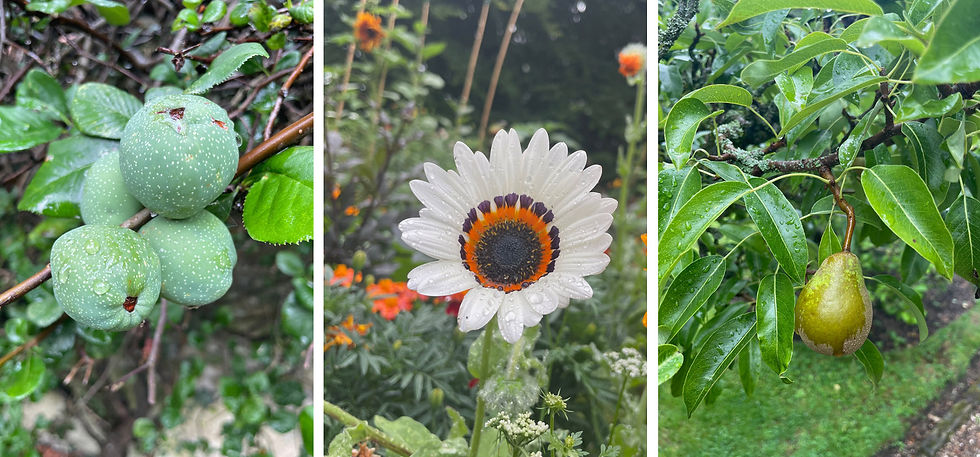
Now that I'm back from our day out, I want to run into the studio and start painting those delicious little white speckles on the apple (above) and start looking deeper at the organic and natural forms that are in my home garden. I've also revisited my illustration and embroidery mood board that's been a work in progress over the years.
East Riddlesden Hall was a perfect day out for us on a drizzly Saturday, there was plenty of children's activities and lots of great food options in the cafe. I had a raspberry and ginger scone incase you're still wondering.
- Molly Newport
- Jun 29, 2025
Personal projects are important for the soul. There's something about creating a gift for someone you love or for your own home that has a magical quality to it. I find it's these projects that inspire brilliant new ideas.
Last year I had the absolute honour of becoming 'Aunty Moll' as my twin sister gave birth to the most beautiful baby boy. As an aunty with no other responsibilities and an embroidery degree, I leapt straight into my pile of fabrics and threads to make this little lad something special.
I haven't made anything for a baby before and I enjoyed the challenge of keeping everything nice and simple. I put a huge amount of pressure on myself to make a good first impression - not that he even knows what an embroidery is yet...
Knowing that baby's room was soft neutral colours with a jungle theme, I started to embroider a tiger. I chose the terracotta red/orange colour based on the bridesmaid dresses we wore at my sister's wedding the year before. With a bit of time and material left over, I made the zebra embroidery too.
Both of these designs were made by stretching material into an embroidery hoop and using a sewing machine to free hand embroider the background colours, the stripes and details were added by hand later.
I took these projects to my fortnightly sewing club over a few months, I find social stitching is the best way to achieve accountability with projects like these, especially if there's a deadline looming.
As the designs were finished, I pressed them and put them into frames for my sister and brother-in-law to unwrap. Baby is quickly approaching a year old now and I'd like to set about making him a new embroidery - perhaps some little felt vegetables to play with.


